-

Graduation
Master of Science (Continuing Education) - MSc (CE)
-

ECTS-Points
120
-

Learning format
-

Duration
6 semesters, part time
-

Start
continuously possible
-

Admission requirements
According to curriculum
-

Language
English
-

Curriculum
Subject to Senate approval
/StudyPages_Header_Master.jpg/jcr:content/StudyPages_Header_Master.jpg)
This master’s program provides an interdisciplinary, practice-oriented education addressing the diverse challenges of protecting and preserving cultural heritage. It focuses on human-made threats – such as armed conflict, illicit trafficking, and vandalism – as well as natural hazards and climate-related risks.
From risk analysis to decision-making: risk assessment, preventive conservation, and collections management are interlinked with emergency planning and evacuation – combined with leadership, staff operations, and crisis communication in realistic crisis and disaster scenarios. International legal frameworks and standards provide the overarching context. Topics such as cultural landscapes and climate change, resilience and adaptation strategies, as well as heritage interpretation and digital tools broaden the professional perspective and support operational implementation.
The program is aimed at professionals and decision-makers in museums, archives, libraries, conservation authorities, environmental and cultural landscape management, public administration, emergency and security organizations, and international institutions.
The degree enhances career prospects in national and international cultural property protection, crisis and disaster management, collections management and preventive conservation, and in interface and coordination roles between cultural heritage institutions and emergency responders.
The "Cultural Property Protection, MSc (CE)" is obtained through a flexible combination of stackable short programs (Certificate Programs & Micro-Credential Programs), which are fully credited in terms of content and finances, enabling flexible, part time study planning.

The preparation for evacuation and emergency measures in peacetime - before a disaster strikes - is a concept emphasised in the 1954 Hague Convention and is a central element of the practical "Cultural Property Protection, MSc (CE)" program.
Ass.-Prof. Mag. Dr.
Anna Maria Kaiser
Study Program Director – Center for Cultural Property Protection

Any questions?
We’re here to help.

Assoz. Prof. Mag. Dr.
Anna Maria Kaiser
Study Program Director


Or contact us directly.
Benefit from our study program
- The continuing education master's program combines various disciplines and enables students to develop comprehensive protection strategies for cultural heritage and to gain a deep understanding of the diverse aspects of cultural property protection.
- By engaging in practical exercises, research-based projects with museums and heritage sites, and collaborating with international organisations in authentic disaster scenarios, you will be optimally prepared for professional challenges. This approach provides valuable insights that extend well beyond theoretical knowledge.
- The "Cultural Property Protection, MSc (CE)" program takes a holistic approach, focusing on the analysis of current man-made and natural hazards and threats to cultural heritage.
-

interdisciplinary
-

practice-oriented
-

innovative teaching methods
Design your individual Master

Curriculum
The “Cultural Property Protection, MSc (CE)” comprises 120 ECTS and is earned through the flexible combination of our stackable short programs (Certificate Programs & Micro‑Credential Programs). Each short program can be fully credited – academically and financially – towards the master’s degree and must be completed within its designated timeframe. The overall combination towards the master’s degree proceeds without a fixed overall schedule.
Two Certificate Programs (CP) of 24 ECTS each form the academic and practical foundation of the master’s program. The CPs start at different times of the academic year – “Cultural Property and Disaster Response, CP” in the winter semester, and “Emergency Planning in Cultural Property Protection, CP” in the summer semester – and may be completed in any order. Each CP spans two semesters and consists of 3-4 modules. Taken together, the two CPs provide a comprehensive perspective on risks, protection strategies, and operational measures in cultural property protection.
For individual specialization, a total of 18 ECTS must be completed from the Micro‑Credential Programs (MCP) listed here. The programs offer practice‑based, project‑oriented, and international focal areas.
CHePiCC online, MCP
Fully online MCP on Cultural Heritage Protection & Climate Change with a focus on practice oriented case work, digital tools/methods, and transfer to an own case study. Start anytime, fully online, and self paced.
Interdisciplinary Project (6 ECTS)
A one week, research integrated format (Summer/Winter School) as part of ongoing research projects, typically once per year (one-time event). Combines current research findings with hands-on exercises addressing real world challenges in cultural property protection. Topics, focus areas, and format vary by project context.
Cultural Property Protection Exercise (6 ECTS)
Practice oriented MCP based on recurring cultural property protection exercises conducted by the Center for Cultural Property Protection. Simulates realistic operational and hazard scenarios and develops competencies in emergency planning, evacuation, damage assessment, and interdisciplinary collaboration. Content, implementation and cadence vary according to professional and organizational requirements.
International Module (6 ECTS)
This MCP is offered in international editions with varying geographic and thematic focuses, conducted in cooperation with international partner institutions. Practice‑based, interdisciplinary field and exercise scenarios highlight cultural property protection as a cross‑disciplinary field of practice. One edition may be credited per master’s degree. Availability and scheduling of editions may vary annually (project‑ or cooperation‑dependent).
A total of 24 ECTS is selected from the University for Continuing Education Krems’ continuing education offerings at NQF Level 7. The individual selection is recorded in the Learning Agreement and enables targeted academic specialization.
The final phase consists of research methodology, a thesis colloquium, and the master’s thesis.
-
Contents
-
Scientific Research Methods – academic research, source criticism, methodological competence
-
Master’s Thesis Colloquium – guidance on topic development and research design
- Master’s Thesis
-
Study Order & Entry Options
All stackable short programs may be completed in any order (unless prerequisites are specified on the respective program pages).
Tip:
The "CHePiCC online, MCP" enables entry into the master’s program at any time.
Downloads
Study Program Director


The study program director is Anna Kaiser, Assistant Professor and Head of the Center for Cultural Property Protection. Her research themes predominantly orbit around the protection of cultural property, integrating a multidisciplinary approach that spans ancient history, military studies, and contemporary strategies for safeguarding heritage. Her methodological expertise lies in combining historical analysis with practical military training, emphasizing the application of strategies for protecting cultural heritage in conflict zones and disaster-prone areas.
The faculty of the "Cultural Property Protetion, MSc (CE)" consist of a large number of renowned international experts from various disciplines with civilian and military backgrounds. They are all involved not only in theoretical and applied research but also in the practice of cultural heritage protection. This ensures that the latest state of research and knowledge is conveyed.
Stackable Program
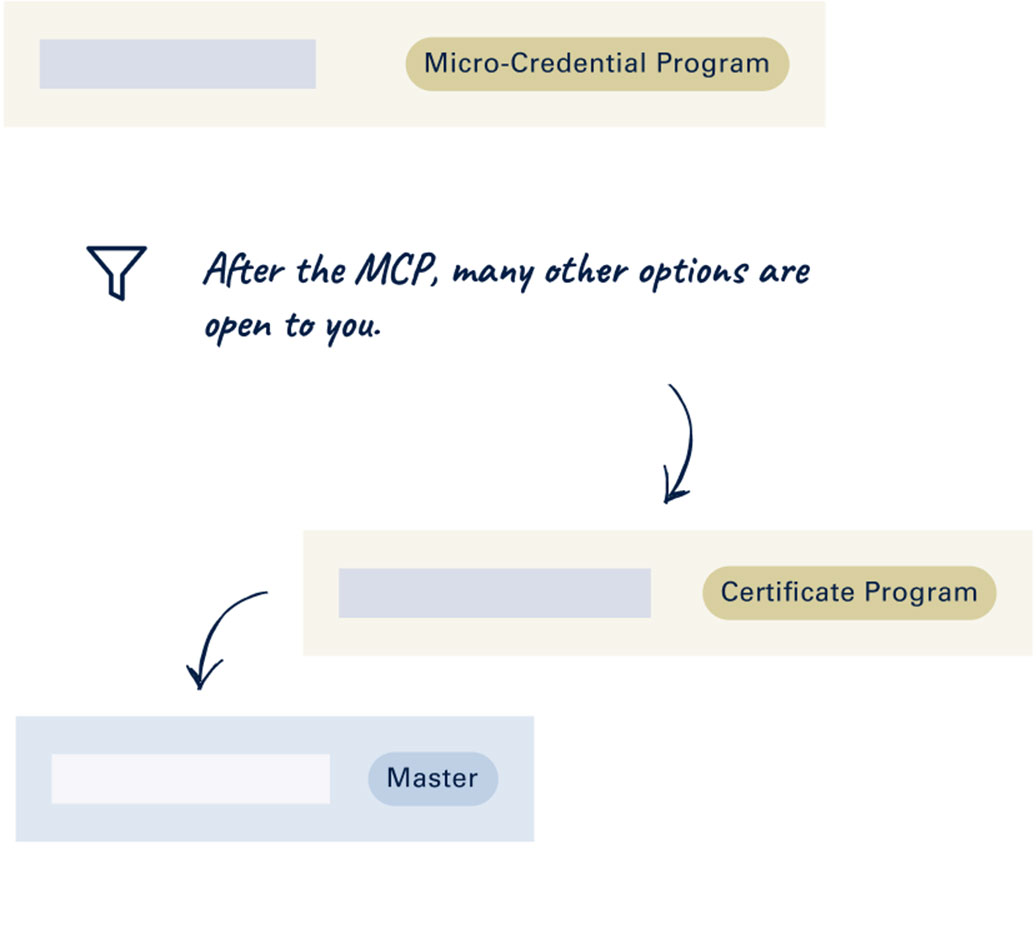
The Stackable Program allows you to break down the "Cultural Property Protection, MSc (CE)" into smaller, flexible steps. The shorter continuing education programs of the Center for Cultural Property Protection, labeled as Stackable Program (Micro-Credential Programs & Certificate Programs), allow you to tailor your studies to your personal needs, interests, and career goals.
Application
Admission requirements
- university entrance qualification (or equivalent training at least at NQF level IV)
- appropriate knownledge of English
- successful completion of an interview with the study program director
Application process
- Contact us to clarify your expectations of the study program and to check the admission requirements
- Online application via the online tool of the University for Continuing Education Krems (UWKonline)
- Carrying out the interview with the study program director
- Admission to the study program
Are you interested in the "Cultural Property Protection, MSc (CE)"?
Please get in touch!
Tags

